
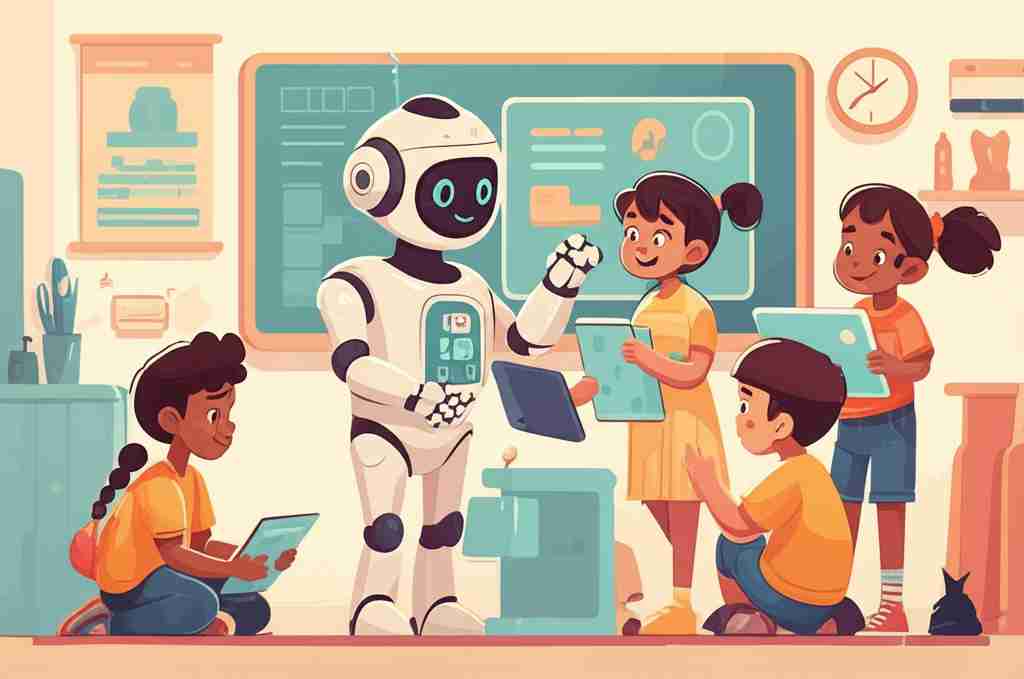
Reconciling Technology with Humanism: The Future of Education in the Age of Generative AI
Introduction: The Age of Generative AI and a Crisis of Purpose
The rapid rise of generative AI has sent shockwaves through educational systems worldwide. As artificial intelligence now writes essays, solves math problems, and provides instant summaries of vast texts, we face a profound challenge: how can we reconcile the tremendous power of these technologies with the longstanding humanistic aims of education? At stake is not just the content our children learn, but the very purpose and design of schooling itself. In the face of this technological upheaval, parents, educators, and policymakers are left wondering: What should we teach? How do we retain what is uniquely human in education? And how can we ensure equity and meaningful engagement for all students?
AI’s Disruption: Rethinking the Purpose of Education
Generative AI’s arrival has fundamentally disturbed educational norms. Previously, education was often seen as a vehicle for transmitting knowledge and skills that would prepare students for stable, well-defined futures. Today, many traditional assignments—book reports, essays, exam practice—can be completed by AI tools in seconds. This upheaval forces us to re-examine the core purposes of education:
- Beyond Transactional Learning: Education should not be reduced to mere knowledge transmission. It encompasses learning to collaborate, knowing oneself, and cultivating flexibility and adaptability for an unpredictable world.
- Human Skills Are Paramount: While AI can mimic or even outperform students in certain tasks, its abilities reinforce the urgency to focus on what differentiates humans: deep attention, meaning-making, ethical reasoning, and interpersonal relationships.
- Motivation and Engagement: In an era when AI can complete academic tasks, what matters most is whether students are motivated and engaged enough to continue learning and growing.
This realignment compels us to move away from emphasizing compliance and rote performance, and instead nurture curiosity, critical thinking, creativity, and purposeful engagement in young people.
Modes of Engagement: Understanding and Supporting Student Motivation
Drawing upon years of educational research, it’s clear that how students engage with learning has profound consequences for their outcomes—in academic performance, mental health, and eventual life opportunities. Engagement exists on a spectrum, with four primary modes:
- Passenger Mode: Students coast through tasks, often doing the minimum. While some achieve acceptable grades, they lack excitement or ownership over their learning.
- Achiever Mode: Students focus intensely on performing well and achieving perfect results, sometimes at the expense of deeper understanding or creativity.
- Resistor Mode: Students avoid or act out, disconnected and potentially disruptive due to lack of connection or the experience of overwhelming challenge.
- Explorer Mode: The ideal—students are deeply proactive, invested, and excited by what they are learning, often going beyond requirements and sparking motivation across subjects.
Generative AI interacts with these engagement modes in complex ways. For students in passenger mode, AI can enable effortless completion of assignments, further disengaging them from developing essential metacognitive skills and critical thinking. However, for explorers and highly motivated students, AI can amplify learning—serving as a research assistant, coach, or editor, while still leaving the hard work of “thinking” and synthesizing up to the learner. Recognizing these modes can help educators and parents intervene meaningfully and design experiences that foster authentic engagement.
The Role of Teachers, AI, and Human Connection
As AI becomes more capable, a central question emerges: Can technology replace the teacher? While AI offers the promise of individualized tutoring, instant feedback, and tailored content in a manner never before possible, the essence of learning remains rooted in human relationships and community.
A study conducted at The Conversation (Reconciling technology with humanism: the future of education in the age of generative AI) found that reliance on advanced technologies without a concurrent humanistic framework risks widening the gap between technological tools and education’s broader social impact. The researchers highlight that while generative AI is rapidly transforming both classroom experiences and institutional decision-making, a balanced approach is crucial. Their findings underline that to harness AI wisely in schools, we must intentionally bridge this divide by reinforcing human-centered values and skills, ensuring that the adoption of technology enhances rather than diminishes our collective capacity for reflection, empathy, and judgment.
In practical terms, the most powerful and sustainable use of AI in education may be as a supportive tool for teachers. For example:
- AI as an Assistant, Not Replacement: AI can help with knowledge transmission, adaptive practice, and administrative tasks (like scheduling and assessments), freeing up teachers to focus on mentorship, emotional support, and relationship-building.
- Personalization at Scale: Adaptive AI tutors can tailor exercises to diverse learners, providing targeted support for those who struggle and enrichment for those who need challenge. This potentially reduces disparities in classrooms with varying skill levels.
- Safeguarding Human Development: Teachers can emphasize deep attention, discussion, and collaborative problem solving—the very skills that are most difficult for AI to simulate and most necessary for thriving in uncertain times.
- Ethical Literacy: Educators can guide students in responsible AI use, helping them understand both the mechanics and the limitations (and risks) of these tools, rather than simply handing over unchecked access.
Equity, Ethics, and Practical Guidance for Parents and Schools
The embrace of generative AI in education creates notable opportunities and risks for equity. Wealthier schools and families can more quickly adopt or avoid technology, while public schools may lag or face conflicting pressures. Further complexities arise when considering:
- Access Gaps: For students or communities with limited resources, AI tutors can help bridge gaps—providing personalized learning support where staff or specialists are scarce. Studies in low-resource settings, such as randomized trials in Nigeria and Malawi, show promise in boosting language and numeracy skills through carefully designed AI interventions.
- Language and Cultural Bias: Most AI tools are built upon widely documented languages and cultures, risking further marginalization for speakers of less-documented languages.
- Screen Time and Tech Overload: The history of screens and mobile devices in education cautions against unregulated introduction of new tech. Excessive screen time has well-documented impacts on attention, socialization, and well-being, particularly in young children.
- Guardrails and Intentional Use: Parents and educators should avoid rushing to adopt new AI tools out of “FOMO.” Instead, they should ask: Is there a real problem this technology will solve? Does it enhance rather than replace human experience?
Practical advice for parents and schools:
- Prioritize Engagement, Not Just Achievement: Ask not only about grades, but about your child’s excitement, agency, and ability to pursue meaningful questions independently.
- Screens with Purpose: In early education, minimize screen exposure; use technology as children mature, especially for building digital and AI literacy with appropriate safeguards and adult guidance.
- Support Social and Emotional Learning: Ensure that schools foster human-to-human interaction, group problem-solving, and conflict resolution—skills that will be at a premium as AI automates technical tasks.
- Demand Ethical, Safe AI Design: Prefer educational AI designed for children, shaped in partnership with child development experts, teachers, and regulated for transparency and equity.
- Teach AI Literacy, Not Just Usage: Give students critical exposure to how AI works, its potential biases, risks, and societal impacts, rather than simply allowing unregulated use for assignments.
- Monitor Feedback Loops: Seek broader measures of educational progress (e.g., agency, curiosity, collaboration), not just grades or test scores.
Conclusion: Toward a Humanistic and Equitable Future
Generative AI is reshaping the landscape of education—but its true promise lies not in replacing teachers or automating learning, but in amplifying what makes us uniquely human. The future of education should deliberately foster curiosity, resilience, purposeful engagement, and ethical reasoning. Educational systems must move swiftly and thoughtfully to refine their aims, design new pedagogies, and ensure all students have not just access to technology, but the opportunity to develop the attentional, social, and reflective capacities essential for a good life in an uncertain world.
By intentionally aligning technological adoption with enduring humanistic values—and placing educators, students, and communities at the center of change—we can ensure that the future of education in the age of AI is as equitable, meaningful, and inspiring as any era before.
About Us
At AI Automation Melbourne, we believe technology should empower people. As AI transforms sectors like education, we support businesses in adopting thoughtful, human-centered automation. Our solutions help streamline tasks, freeing educators and teams to focus on what matters most—creativity, relationships, and meaningful engagement in a rapidly changing world.