

Designing for Humans: Why Most Enterprise Adoptions of AI Fail
Introduction: The Unseen Crisis in AI Adoption
Enterprises are racing to adopt artificial intelligence (AI) as a catalyst for growth, efficiency, and innovation. Yet, despite soaring investments and endless boardroom excitement, the sobering reality is that most enterprise AI initiatives fall short of expectations. Failures are often costly, frustrating, and, even worse, poorly understood. Instead of transformation, organizations are left wondering what went wrong—and who is to blame.
Why do so many AI projects collapse before delivering value? The answer isn’t just technical; it’s deeply human. Drawing on the latest research and firsthand industry experience, this article uncovers why designing AI for human realities is the difference between successful transformation and another failed AI experiment.
The Reality of Enterprise AI Adoption: Beyond Hype
While executives envision AI as a game-changer, adoption across most organizations remains in its infancy. There persists a widespread misconception that AI only means chatbots or rudimentary automations. Yet, the field is evolving rapidly:
- AI Augmentation: Currently, most businesses are using AI to work alongside people, boosting productivity but still depending on human oversight.
- Transition to AI Agents: In the coming 6 to 12 months, autonomous AI agents will move from experimental to mainstream, enabling more dynamic and independent automation of complex business processes.
- Eventual Mass Adoption: Within the next two years, expect mass enterprise adoption, with AI automating not just tasks—but entire departments.
Despite this trajectory, most companies have yet to take concrete steps toward becoming truly AI-first. The optimism around AI often downplays a critical factor stalling progress: people.
The Hidden Obstacle: Human Resistance and Asymmetric Goals
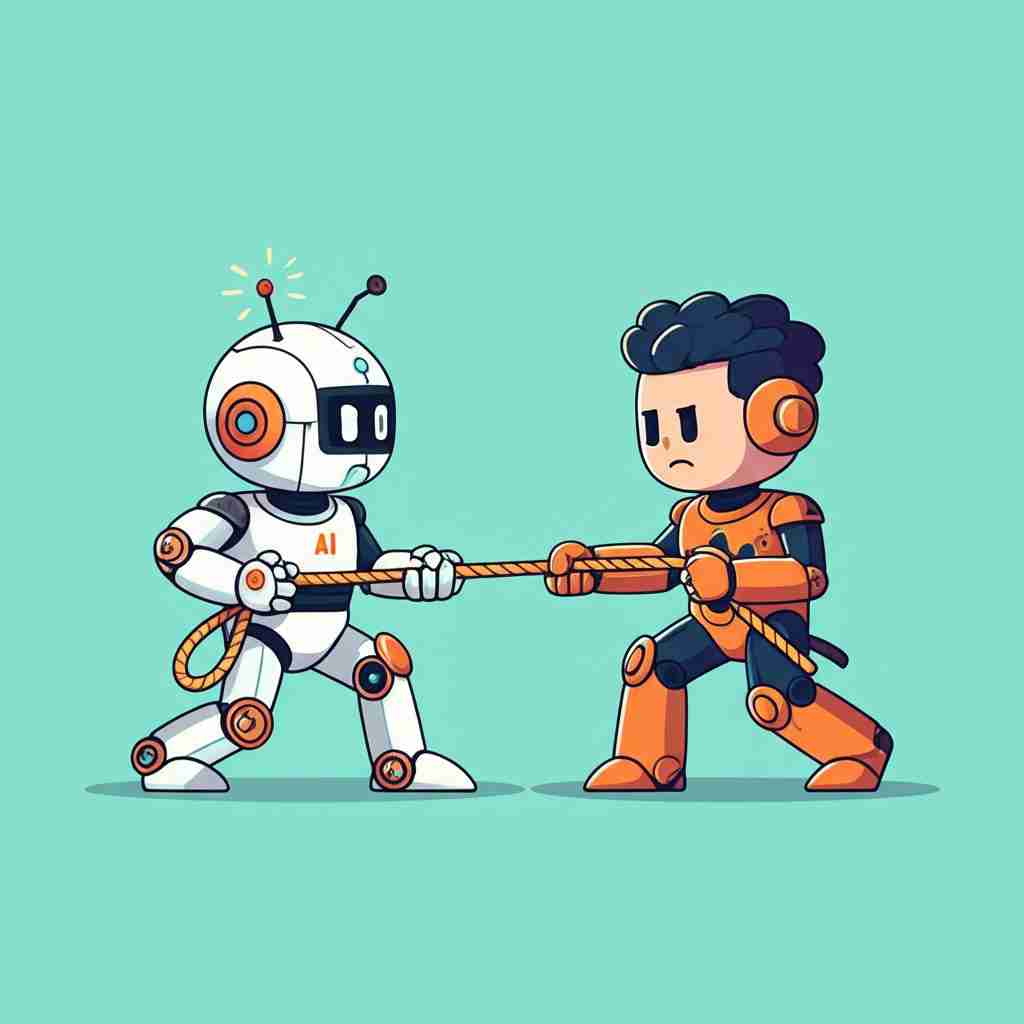
The leading barrier to successful enterprise AI is not technology, but human resistance—rooted in conflicting interests between executives and employees. Here’s how this misalignment plays out:
- Executives are focused on growth and efficiency. AI promises cost savings, faster workflows, and competitive advantage—their natural priorities.
- Employees seek job security and relevance. For most, work is about earning a living. Any new automation raising questions about job redundancy is viewed with suspicion, or even quiet sabotage.
This clash creates a situation where AI experts and developers rely on process owners (often employees) for critical insights into workflows and standard operating procedures. But employees, fearing for their own future, may withhold information, offer minimal cooperation, or delay project progress. The end result: slow or underperforming AI projects that frustrate all involved.
From the AI expert’s perspective, it’s a paradox. Assessment of the project’s success is based on the output and efficiency of the automation, but the implementation depends on candid collaboration from a workforce that might see the automation as a threat.
If this internal resistance and misalignment go unaddressed from the outset, projects risk ballooning in time and cost, ultimately delivering lackluster results—or failing entirely.
Evidence from the Field: Why ‘Designing for Humans’ Matters
A study conducted at CIO.com delved into why so many enterprise AI projects miss the mark. The research titled Designing for humans: Why most enterprise adoptions of AI fail found that technical prowess alone is inadequate for AI success. Instead, lasting failure stems from ignoring the messy, human foundations of the workplace—specifically, inadequate change management, poor stakeholder alignment, and resistance from those most affected by AI-driven change. The report highlights that when executives do not proactively address human concerns and align incentives, the risks of costly project abandonment and even reputational damage escalate sharply. When organizations design and implement AI with a human-centered focus—emphasizing inclusion, training, and transparency—adoption and ROI improve dramatically. Read the full study here.
Practical Solutions: Turning Human Challenges into Human Strengths
So how can organizations avoid these all-too-common pitfalls? Experience and research converge on four actionable strategies that turn employees from obstacles into champions:
- Dedicate an Internal Project Manager
- Assign a team member whose main responsibility is to ensure the AI initiative crosses the finish line—working internally, not just as a side duty.
- This person bridges communication between the external AI team and the business, providing accountability and continuity.
- Align and Incentivize Employees
- Employees most critical to an AI project’s success should have shared stakes in its outcome—via bonuses, recognition, or career progression opportunities.
- Ensuring “we win together” is a powerful antidote to passive resistance.
- Build Internal AI Automation Teams
- Repurpose and retrain current employees, leveraging their institutional knowledge to form dedicated AI teams.
- This gives employees a sense of ownership and reassurance, while ensuring solutions are grounded in real workflows.
- Repurpose Employees, Don’t Just Replace
- Rather than viewing AI solely as a path to downsizing, look for ways to redirect talent toward higher-value, human-centered work—such as deepening customer relationships or focusing on innovation.
Applying just the first two strategies—assigning a dedicated project manager and aligning employee incentives—can neutralize most of the barriers that lead to failure. For organizations with 50 or more employees, building internal AI expertise is the natural next step.
The Path Forward: Building an AI-First, Human-Centered Organization
The future is clear: as AI capabilities accelerate, the organizations that thrive will be those that approach transformation as a team sport—not a zero-sum contest between leadership and staff. Achieving this involves both mindset and skillset shifts:
- Invest in Training: Encourage subject matter experts to learn AI basics. Even a modest investment in upskilling yields “first-mover” value, as the global landscape is still in its early AI-adoption phase.
- Foster Entrepreneurial Thinking: Employees with deep domain expertise are uniquely positioned to identify opportunities for AI-driven value—even new roles or business ventures yet to be imagined.
- Prioritize Transparent Communication: Demystify AI. Involve employees in the planning process, listen to their concerns, and emphasize how the technology will support or evolve their work.
- Adapt Over Time: Start with augmentation (humans + AI), then iteratively explore automation where appropriate. This phased approach improves morale while maximizing ROI.
The challenge is less about technology and more about tapping your workforce as allies in transformation. Boosting the organization’s collective “AI literacy” empowers staff at every level, minimizing resistance and accelerating the shift to operational excellence.
Conclusion: Plan for People, Not Just Technology
The make-or-break factor in enterprise AI is not which algorithm you choose—but how well you align your technology with the people it’s meant to serve. Executive vision and AI expertise, while essential, only go so far. The real differentiator is a deliberate, incentive-aligned, human-centered strategy that turns skepticism into engagement and potential friction into fuel for growth.
By designing AI adoptions with and for humans, organizations not only sidestep failure—they unlock a more innovative, resilient, and adaptive workplace, ready to capitalize on the next wave of technological change.
About Us
At AI Automation Melbourne, we believe that successful AI adoption starts with people. We design practical AI and automation solutions for local businesses, focusing on user-friendly tools that empower teams—not replace them. Our approach ensures AI works alongside your staff to boost efficiency and support real workplace needs, helping you navigate change with confidence as technology evolves.